Australia has one of the highest rates of skin cancer in the world. That makes your own skin worth a regular look. Most spots and moles are harmless. The point of checking is simply to notice when something is new or has changed.
You do not need special gear or training to do it. Good light, a mirror and a few minutes are enough. This guide covers how to check, what to look for and when to book in with your GP. It is general information only.
Why checking your own skin matters
Skin cancer found early is generally easier to treat. Cancer Council NSW, in its guide to skin checks, notes that early detection improves the chances of successful treatment. It also says Australians are very good at finding their own skin cancers. You are the person who sees your skin most often, so you are well placed to spot a change.
The habit is more useful than any single check. Getting to know what is normal for your skin is the real goal. Once you know your usual spots and freckles, a new one stands out. A change in an old one becomes easier to see too.
How to check your skin
Cancer Council Australia advice on checking for signs of skin cancer is simple. Undress completely and stand in good light. Check your entire body, not just the parts that see the sun. Use a mirror for your back and scalp, or ask a partner, friend or family member to help.
Skin cancers can appear in places that rarely get sun. Cancer Council lists the soles of the feet, between the fingers and toes and under the nails. Cancer Council NSW adds the palms, the breasts and the genitals. A full length mirror and a hand mirror make the back of the neck and the backs of the legs much easier to see.
Working in the same order each time helps you avoid missing a patch. Start at the scalp and face, then move down the neck, chest and arms. Check the hands front and back, then the torso, legs and feet. Finish with your back, using the mirrors or a helper.
How often to check
There is no single rule that suits everyone. Cancer Council NSW suggests picking a day each month that works for you. It also notes that some dermatologists suggest a check at each change of season. How often you check can depend on your own level of risk.
If your skin tends to get dry and itchy in the cooler months, a regular look can double as a skin care check. Our guide to conquering dry cracked skin in Perth covers that side of things. Just keep the two goals separate in your mind. Dryness is about comfort, while a skin check is about spotting change.
The main types of skin cancer
Cancer Council Australia describes three main types. Each one tends to look a little different. Knowing the basics helps you describe what you see to your doctor. It does not replace a proper assessment.
Melanoma
Melanoma is the most deadly form of skin cancer. If it is not treated it can spread to other parts of the body. It can appear as a new spot or as an existing spot that changes in colour, size or shape. It can also turn up on skin that is not normally exposed to the sun.
Nodular melanoma is a fast growing type that looks different from common melanomas. It is raised, firm and dome shaped. Many are red or pink, although some are brown or black. Over time it may bleed and crust.
Basal cell carcinoma
Basal cell carcinoma, or BCC, is the most common type but the least dangerous. It can look like a red, pale or pearly lump. It can also be a dry, scaly area that ulcerates or does not fully heal. It grows slowly and usually appears on skin that often sees the sun.
Squamous cell carcinoma
Squamous cell carcinoma, or SCC, often looks like a thickened, red and scaly spot. It may bleed easily, crust or ulcerate. It grows over some months and usually appears on areas exposed to the sun. Cancer Council notes it is more likely in people over 50.
Using the ABCDE guide for moles
Cancer Council Australia uses a simple ABCDE guide to help people spot possible melanoma. It is a prompt for what to watch, not a way to diagnose yourself. Any spot that fits one of these points is worth showing to a doctor. Here is how the guide breaks down.
- Asymmetry: the two halves of the spot do not match.
- Border: the edge is spreading, irregular or notched.
- Colour: the spot is blotchy with several colours, such as black, blue, red, white or grey.
- Diameter: the spot is getting bigger.
- Evolving: the spot is changing or growing.
Cancer Council also lists other changes to look out for. These include moles that itch or tingle and moles that bleed or weep. A rough, scaly or ulcerated surface is another sign worth checking. So is any spot that looks different from all the others.
Moles and who is at higher risk
Moles are usually harmless and tend to look alike. Cancer Council says Australian children have more than 50 moles on average by the age of 15. It advises seeing a doctor if a mole looks different from your others. You should also get checked if a new mole appears after the age of 25.
Some people carry a higher risk than others. People with lots of moles or freckles are one group. People whose skin burns quickly, often with fair or red hair, are another. People with naturally very dark skin have a lower risk, but Cancer Council says they still need sun protection.
When to see your GP
Cancer Council NSW says anything new that is still there after a few weeks should be checked by a medical professional. The same goes for any spot that is changing or worrying you. A change does not always mean cancer. It does mean it should be looked at by your GP or a dermatologist.
If you are unsure, book in anyway. Cancer Council’s advice is simple: when in doubt, speak to your GP. Plenty of people feel awkward taking up a doctor’s time over a small spot. It is a normal reason to visit, and it is what clinics expect to see.
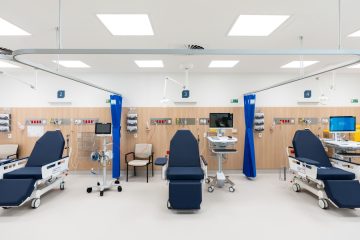
A short wait in a clinic is part of most health visits. Good clinics put thought into comfort, from the reception desk to chairs for health facility waiting rooms. Bring a note of when you first saw the spot and anything that has changed. A photo taken on the day you noticed it can also help.
It helps to know what to expect after any check or procedure, big or small. That applies to skin and to other health care too. Our post on minor short term side effects of dental implant surgery is one example of preparing for recovery. Your doctor will explain the next steps that apply to you.
Making it part of your routine
A skin check fits easily into other health habits. Some people do it after a shower on the first weekend of the month. Others link it to a season change or a regular appointment. The best time is simply one you will remember.
Big events can be a good prompt too. If you are planning a wedding, our guide to mind, body and skin health for brides looks at getting ready in other ways. A skin check sits well alongside that kind of planning. It costs nothing and only takes a few minutes.
Frequently asked questions
How often should I check my skin?
Cancer Council NSW suggests a monthly check on a set day. Some dermatologists suggest checking at each change of season. Your doctor can advise based on your own risk.
Do I need to check skin that never sees the sun?
Yes. Skin cancers can appear on the soles of the feet, between fingers and toes and under the nails. Cancer Council NSW also mentions the palms, breasts and genitals.
What does a worrying spot look like?
Look for anything new, changing or different from your other spots. The ABCDE guide covers shape, border, colour, size and change. Itching, bleeding or a scaly surface are also worth showing a doctor.
Is a new mole after 25 a concern?
Cancer Council advises seeing a doctor if a new mole appears after the age of 25. Most moles are harmless. A doctor can tell you whether it needs any further attention.
This article is general information only and is not medical advice. Please speak with your doctor or a qualified health professional about any spot or change in your skin.